
Difficulty: Level 1 (Buying the gear) | Level 5 (Using it)
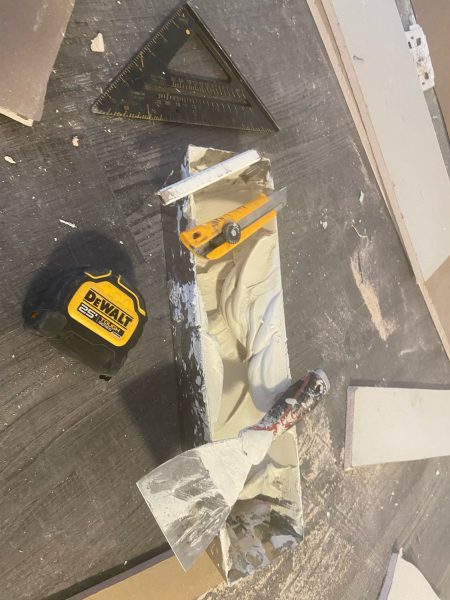
When I first started, I hardly did any mudding and taping at all. To be honest, I avoided it. It’s a bit of an art form, and it’s notoriously hard to get right. Like every beginner looking to save a few bucks, I fell into the “Plastic Trap.” I bought a plastic mud box with the little metal edge, thinking it was a smart way to save $5.
It was garbage.
The mud caked into the plastic corners like it was part of the structural integrity of the box. The metal edge caught my knife, and the seam where the steel met the plastic became a breeding ground for dried-up chunks that eventually ruined my finish. I threw it out and—being a slow learner—bought another plastic piece of garbage. I threw that one out, too.
Now? I don’t touch anything that isn’t full stainless steel. And I don’t use mud straight out of the bucket without soaking it first.
Direct Answer: Which Mud Box and Compound Should You Use?
For a professional finish, always use a 12-inch or 14-inch stainless steel mud pan; plastic pans are harder to clean and lead to “chunking” in your finish. For the compound, the best setup is the CGC Synko line: use Yellow (Lite Taping) for your first coat to bed the tape, and switch to Green (Lite All-Purpose) or Red (Classic Finish) for your filling and topping coats. If you are only doing one room, Blue (Dust Control) is the best all-around compromise.
The “Journeyman” Toolkit: Gear You Won’t Throw Away
If you’re going to do this, buy the gear that lasts a career, not a weekend.
🛠️ The Pan & Knife Setup
- 14-inch Stainless Steel Mud Pan (Helps you carry more mud and stays clean).
- 6-inch Stainless Steel Joint Knife (For loading the pan and small work).
- 12-inch Taping Knife (For the big feathering coats).
1. The Stainless Steel Manifesto: Why Plastic is a Trap
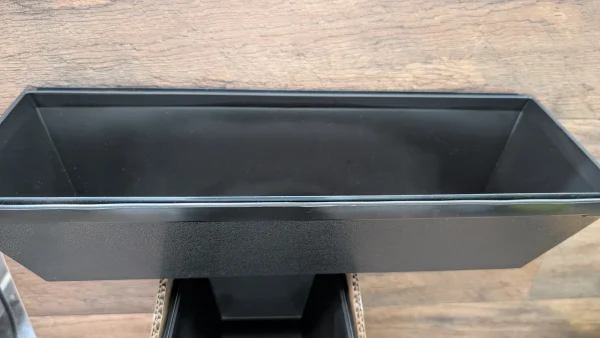
It’s not that plastic boxes don’t work—they do, for about twenty minutes. The problem is the cleanup. Drywall mud is essentially liquid rock, and it loves to cake onto plastic surfaces.
- The Corner Problem: Plastic pans usually have more rounded or complex corners where the mud hides. If you don’t get every speck out, that dried mud will break off into your fresh mud the next day.
- The Seam Disaster: Most plastic boxes have a metal strip on the edge for wiping your knife. Mud gets forced into the tiny gap between the metal and the plastic. Once it dries there, you’ll never get it out.
- The Solution: A Stainless Steel Pan. You can let the mud dry overnight, hit it with a sander (as I’ve mentioned before), or scrape it clean in seconds. It’s a smooth, continuous surface that doesn’t hold onto “gritty” reminders of your last job.
2. The CGC Synko Color Guide: Yellow, Green, Red, or Blue?
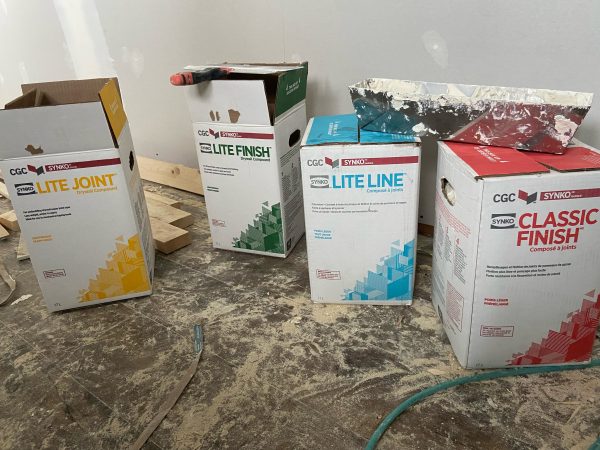
I’ve used every color in the CGC Synko Lite line. While you can technically finish a job with whatever box, there is a reason they are color-coded. Here is how a Journeyman uses them:
CGC Synko Yellow (Lite Taping)
This is my go-to for the first layer. It’s designed to have a high adhesive count. When you’re bedding your paper tape, you want it to stick and never move.
- Pro Tip: Use Yellow for the tape coat only. It’s a bit harder to sand, so don’t use it for your final skim.
- Pro Tip: Wet the tape before applying it to to the wall helps reduce dried out air spots.
CGC Synko Green (Lite All-Purpose)
Green is the “Workhorse.” It’s perfect for the next two layers (the fill coat and the skim coat). It sands easier than Yellow and has a great “slip” to it.
CGC Synko Red (Classic Finish)
This is my personal favorite for finishing. If you have a lot of mudding to do, or a whole house, Red is the king. It pulls across the wall like butter and leaves a very fine, smooth finish that requires minimal sanding.
CGC Synko Blue (Dust Control)
If you are just doing one room or a small patch, go with Blue. It’s a “jack of all trades” mud. The best part? The dust is engineered to fall straight down rather than floating through the house. It’s the “homeowner’s hero.”
The “Journeyman” Toolkit: The Mixing Station
Don’t use mud straight from the bucket. It’s too thick, and it will kill your wrists.
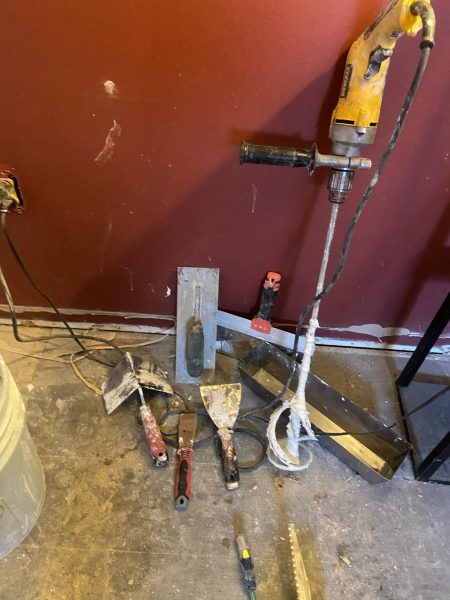
🛠️ The Mixing Rig
- Heavy-Duty Corded Drill (Don’t burn out your cordless drill; you need the torque).
- Mud Mixing Paddle (The “eggbeater” style is best for Synko Lite).
- 5-Gallon Clean Bucket
3. The Consistency Secret: The “Finger Test”
The biggest mistake beginners make is using mud that is too firm. The firmer the mud, the harder it is to pull across the wall. It’ll drag, it’ll leave “cat faces” (pockmarks), and it’ll tire you out.
My Ritual:
- Open the bucket.
- Add a bit of water.
- Whip it with a corded drill until it’s smooth.
- The Finger Test: Pull your finger across the surface of the mud in the bucket. It should leave an indent, but that indent should fill back in about a quarter of the way.
If it doesn’t move, it’s too thick. If it fills in completely, it’s soup. You want it wetter than you think you want it. Your first layer (the taping coat) should be slightly thicker than the next two, but even then, it should be very very creamy, not chunky.
4. Maintenance: Don’t Be a Slave to the Bucket
One of the best tricks to mudding and taping is to keep a clean trowel. I don’t mean washing it every ten minutes. I mean taking the excess mud on your knife, scraping it back into your metal box, and starting every pass with a “clean slab.” Every carpenter I’ve ever teamed up with M Mud And Tape has repeated over and over again clean trowel clean, trowel clean towel and since becoming a journeyman carpenter, I repeat it.
If you keep working the same messy pile of mud on your knife, you’re just moving grit around. Keep the box clean, keep the knife clean, and the wall will follow suit.
Comparison: Drywall Compound Cheat Sheet
| Mud Color (CGC) | Best For… | Sanding Ease | Pro Secret |
| Yellow | Taping / 1st Coat | Hard | Highest “stick” factor. |
| Green | Filling / 2nd Coat | Easy | The best “all-arounder.” |
| Red | Finishing / Skimming | Very Easy | My favorite for a “glass” finish. |
| Blue | Small Jobs / 1-Box | Moderate | Best for occupied houses (low dust). |
FAQ: Mud and Boxes in 2026
1. Can I use a corded drill for small batches?
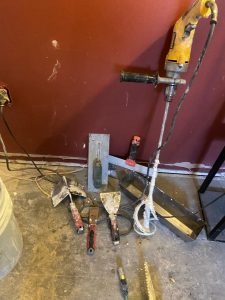
Yes. In fact, I recommend it. Cordless drills often lack the constant torque needed to whip thick mud, and you’ll end up killing your batteries. A cheap corded drill is a drywaller’s best friend.
2. Why does my mud have bubbles in it?
You probably didn’t whip it enough, or you whipped it too fast and introduced air. After mixing with a drill, let the mud sit for five minutes, then give it one quick hand-stir with your knife to pop the bubbles.
3. Is stainless steel harder to keep “shiny”?
Who cares about shiny? You want “smooth.” Stainless steel won’t rust if you treat it right, but even if it gets a little dull, it won’t affect the “pull” of your knife like a scratched plastic box will.
What’s Next?
Now that you’ve got the right mud and the right box, it’s time to put them to work.
- Ready to tackle those corners? See my guide on Mudding Inside Corners on Drywall.
- Got a hole that’s nowhere near a stud? Try the Butterfly Patch Method.
- Want a new Circular Saw? Check out The Best Corded Circular Saw A Journeymans Review 2026
Get more honest, grit-covered advice at Journeymantips.com.