
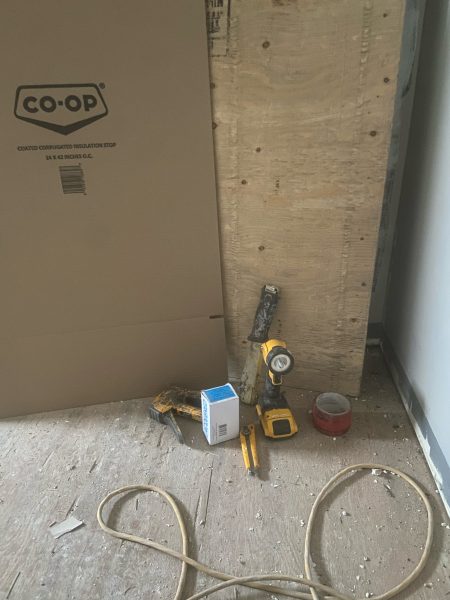
So, you’ve decided it’s time to blow in some fresh insulation to stop your heating bill from bleeding you dry. Good news: it’s one of the most effective DIY wins you can pull off. Bad news: to do it right, you have to move through your attic like a gymnast monkey.
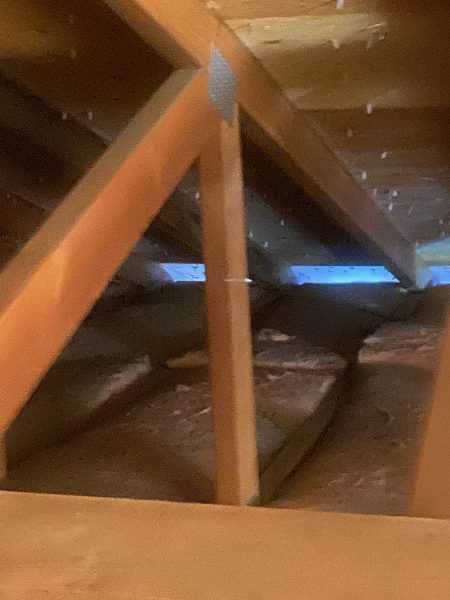
I’ve spent more hours than I can count on my belly in a 130-degree attic, dodging roofing nails and trying not to put a foot through a customer’s bedroom ceiling. I’ve smacked myself with a hammer tacker in spaces so tight I couldn’t even swear properly, and I’ve learned the hard way that if you don’t secure your baffles, the blower machine will treat them like paper planes.
If you want a house that actually stays warm, you need to master the art of the insulation baffle before you ever touch that blower hose.
Direct Answer: How to Add Insulation Baffles to an Existing Attic
To add insulation baffles to an existing attic, you must secure them directly to the roof rafters at the eaves to create a clear air channel from the soffit vents to the attic space. Use a combination of a hammer tacker for speed and a hand-punch stapler for tight corners, ensuring the bottom of the baffle is “buttoned up” against existing bat insulation to prevent blown-in material from clogging the intake vents.
The Journeyman Toolkit: Attic Survival Gear
Before you crawl into that dark hole, make sure you have everything. You do NOT want to realize you forgot staples when you’re 40 feet from the hatch.
🛠️ The Fastener Combo
- Heavy-Duty Hammer Tacker (For the areas where you have room to swing).
- Manual Hand-Punch Stapler (Essential for the tight “v” where the roof meets the floor).
- 1/2-inch Galvanized Staples (Long enough to bite through cardboard and into old wood).
🛠️ The “Monkey” Mobility Kit
- High-Lumen LED Headlamp (Hands-free is the only way to live in an attic).
- Professional Grade Tuck Tape (For fixing shatters and sealing gaps).
- Retractable Utility Knife (For scoring and modifying baffles).
1. The Golden Rule: Rafters, Trusses, and Not Falling Through
It sounds obvious, but it needs to be said: Only step on the rafters or trusses. If you step on the drywall ceiling, you’re going to have a very bad, very expensive day.
When I’m working in an existing attic, I always hike up a piece of plywood (a “creep board”) to lie down on. Since you’re going all the way to the edge of the roof, the clearance above your head is going to be minimal. You’ll be on your stomach most of the time. Having that plywood deck keeps your weight distributed and gives you a stable platform to work from so you aren’t balancing on a 2×4 like a tightrope walker while trying to swing a hammer.
2. Why Cardboard Beats Plastic (The Modder’s Secret)
You’ll see those thin pink or blue foam baffles at the big-box stores. They’re fine, but I prefer the cardboard (fiberboard) baffles. * Durability: Foam baffles can be brittle. If you’re contorting yourself in a tight spot and accidentally sit on one or whack it, they shatter.
- The “Tuck Tape” Save: If you do happen to put a hole through a cardboard baffle or it shatters, it’s an easy fix. Grab that Tuck Tape you brought up and tape that sucker right back up. Instant, permanent fix.
- The Modification Hack: Not every rafter bay is a perfect 16 or 24 inches. Sometimes you hit an odd corner. With cardboard, you can score it lightly with your knife along the line you need and fold it over. It creates a much cleaner, stiffer edge than trying to mush a foam baffle into a space it wasn’t meant for.
3. The “Button Up” Technique: Stopping the Clog
The whole purpose of an insulation stop is to let your attic breathe through the soffit vents. If your attic can’t breathe, you get moisture buildup, mold, and ice dams.
If your attic already has some old bat insulation, use it to your advantage.
- Slide the baffle down the rafter until it meets the edge of the wall.
- Button it up right against the existing bat insulation.
- By wedging the baffle against the bat, you create a physical barrier.
When you start the blown-in insulation later, that “buttoned” seal prevents the loose-fill stuff from sliding down into the soffit. You want the max fill possible in your attic, but you can’t have it blocking the air intake.
The Journeyman Toolkit: The “Gymnast” Setup
Attics are tight. Use tools that don’t require three hands.
🛠️ The Finishing Touches
- N95 Respirator or P100 Mask (Don’t breathe 40-year-old dust and fiberglass).
- 2’x6′ Plywood Scrap (Your makeshift floor).
- Folding Utility Knife.
4. Installation: Hammer Tacker vs. Punch Stapler
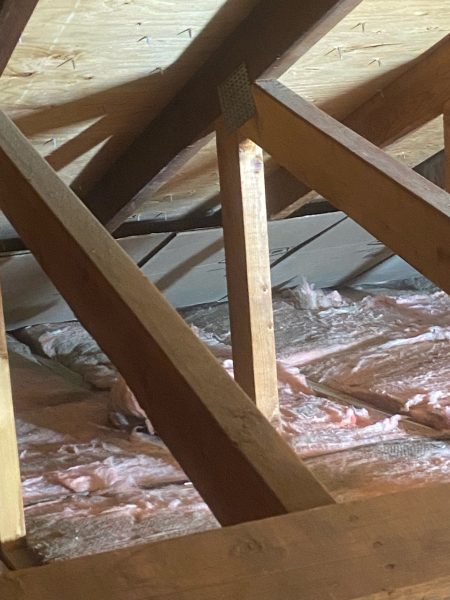
This is where the gymnast monkey moves come in. You’re going to be lying on your plywood, reaching into the “eave” (the tightest part of the roof).
- The Hammer Tacker: Use this for the top of the baffle where you have a little bit of swinging room. It’s fast and drives the staples deep.
- The Hand-Punch Stapler: Once you get down into the “V” where the roof deck meets the floor, you won’t have the 6 inches of clearance needed to swing the hammer tacker. This is where you switch to the hand punch.
- The “Lazy” Trap: Don’t get lazy just because it’s difficult to reach. If you don’t use enough staples, the air pressure from the blowing machine can actually knock the baffles out of place. Use 1/2-inch staples—anything shorter might pull out of old, dry rafters under the weight of the new insulation.
Comparison: Baffle Materials for Existing Attics
| Feature | Cardboard (Fiberboard) | Foam (Polystyrene) |
| Modification | Easy (Score and fold) | Difficult (Tends to snap) |
| Durability | High (Can be taped if torn) | Moderate (Brittle) |
| Airflow Path | Very Rigid | Can sag if not stapled well |
| Pro Tip | Best for custom/old rafters | Best for standard 24″ OC spacing |
5. FAQ: Attic Ventilation & Baffles
1. Do I need a baffle in every rafter bay?
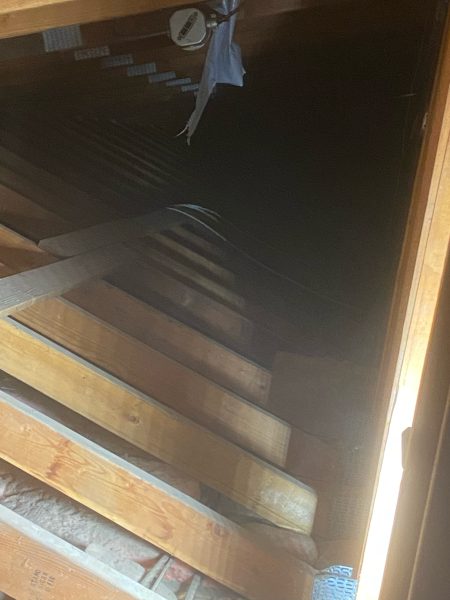
Ideally, yes. If you want maximum cross-ventilation and to prevent ice dams, you should have a clear path for air in every single bay. If you only do every other one, you’re leaving “dead zones” where heat can build up and melt snow on your roof unevenly.
2. Can I just use a piece of cardboard I found in the garage?
No. Proper ceiling baffles are treated to be fire-retardant and are shaped to provide a specific 1-to-2-inch air gap. Scrap cardboard is a fire hazard and will likely sag and block the vent anyway.
3. What if my insulation is already covering the soffits?
You’ve got to get in there with a rake or your hands and pull it back first. You cannot install a baffle over the top of a clog. Pull it back, install the baffle to clear the “breathing” path, and then re-insulate around it.
What’s Next?
Now that your attic can breathe and you’re ready for the blow-in, make sure the rest of your “envelope” is sealed up.
- Found a leak in the roof while you were up there? Check out How to Patch a Concrete Floor (wait, that’s the floor… stay tuned for my roof patch guide!).
- Need to seal the hatch? Read up on Which White Silicone is Best for air-sealing the trim.
- Getting the rest of the house ready? See How to Back-Patch Drywall.
For more honest advice, visit Journeymantips.com.