
Difficulty: Level 4 (Patience Required)
Time: 2–3 Days (Including Dry Time)
Keywords: Mudding inside corners on drywall, best way to tape inside corner drywall, corner trowel.
I learned the hard way that “less is not more” when it comes to drywall mud. Years ago, I was finishing a hallway and I wanted the cleanest, tightest corners possible. I grabbed my corner trowel and pressed it into that corner with everything I had. I squished every single drop of mud out from behind the tape until it was perfectly flat.
The next morning, I walked back in and wanted to cry. Every single corner had a hairline crack running from floor to ceiling. The tape was “starved”—I had pushed out the very thing that was supposed to hold it to the wall.
Drywalling is a game of “Goldilocks”—you need enough mud to bond, but not enough to create a hump. If you’re tired of tape blisters and air bubbles, you’ve come to the right place. I’m going to show you the “Journeyman” way to get sharp corners without losing your mind.
Direct Answer: The Best Way to Tape Inside Corners
The most effective way to mud inside corners is to apply a “fat” layer of all-purpose compound to both sides of the corner before embedding paper tape that has been lightly dipped in water. Use a metal corner trowel to smooth the tape, starting 6–12 inches down from the top to prevent the tape from pulling out. Ensure a thin layer of mud remains behind the tape to prevent cracking and blistering.
1. The Tool Trap: Why the Metal Box Wins
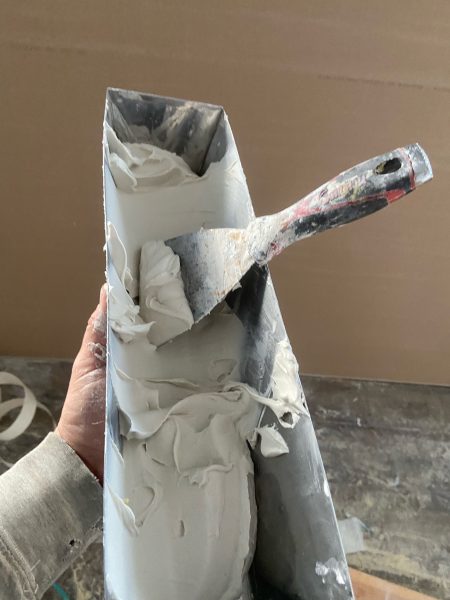
When you go to the big-box store, they’ll try to sell you a plastic mud box with a metal edge. Don’t buy it. I bought one when I started, and it’s a nightmare. They are messy, they’re impossible to clean because your sander won’t fit into the tight corners to get the dried mud out, and the plastic edges eventually catch your knife and leave “drag marks” in your finish.
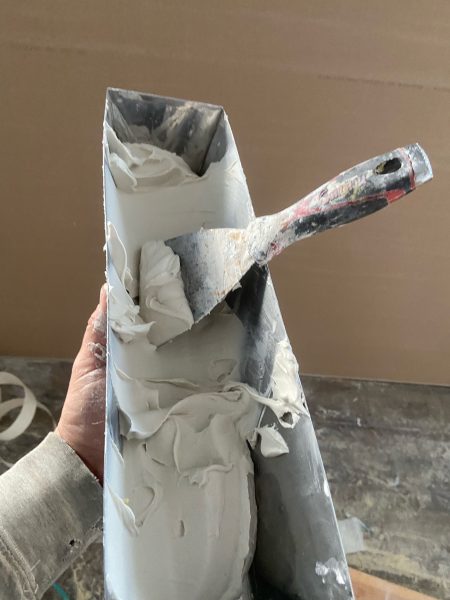
Go with the straight metal box. It’s easier to clean, it lasts forever, and it’s the only way to keep your mud fresh.
🛠️ The Journeyman’s Corner Kit
- Stainless Steel Mud Box (Ditch the plastic; go metal).
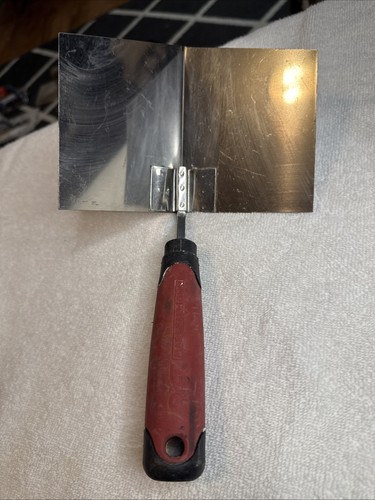
- 90-Degree Corner Trowel (Look for one with a slightly flexible blade).
- Paper Drywall Tape (Still the king for inside corners).
2. The “Wet Tape” Secret for Air Bubbles
The #1 complaint I hear is: “Why do I have air bubbles behind my tape?” Old-timers taught me a trick that changes everything: Dip your paper tape in a bucket of water before you put it on the wall.
- Why it works: Dry paper tape is thirsty. It sucks the moisture out of the mud the second it touches it. If the mud dries too fast, it creates a pocket of air—a blister.
- The Result: Wetting the tape allows the mud to suction to it perfectly. It gives you a much longer “open time” to work the corner and prevents those giant blisters that you’d usually have to cut out and patch later.
3. The “Start-Down” Technique (Stop Pulling Your Tape Out)
If you start your corner trowel at the very top of the wall and pull down, you are going to pull the tape right out of the corner. It’s frustrating and messy.
The Pro Move:
- Apply your mud “fat” on the wall.
- Start your trowel about 6 inches to a foot down from the ceiling.
- Pull the mud down toward the floor.
- Once that’s smooth, go back to the top and work the last 6 inches up toward the peak.
- Use a straight 6-inch knife to finish that final peak if the corner trowel is being stubborn.
Journeyman Tip: You’ll find the “natural” angle for the trowel fairly quickly. It’s not quite a 45-degree tilt; it’s a feel. If you feel it grabbing the tape, flatten your angle.
4. The “Dirty Trowel” Cleanup Hack
Every DIY guide tells you to wash your tools with water every 10 minutes. I don’t do that.
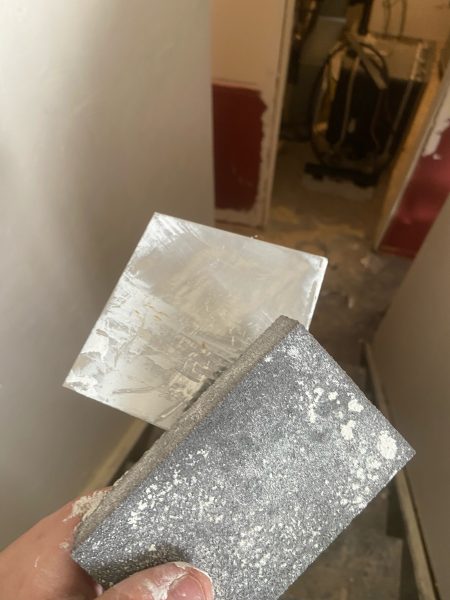
Whenever I wash my metal trowels with water, they eventually get spots of rust, and I end up having to sand them anyway. Here is what I do:
- Keep it “Work Clean”: During the job, keep your trowel clean by scraping the excess mud back into your metal box and starting each pass with a fresh slab of mud.
- The Overnight Dry: Let the excess mud dry on the trowel overnight.
- The Box Sander: The next morning, take your Sanding Sponge and just zip the dried mud off the tool. It’s faster, it keeps the metal dry, and it won’t ruin your sink.
🛠️ The Beginner’s “Cheat” Sheet
- Self-Adhesive Mesh Tape (Great for beveled edges, but don’t use it on butt joints).
- 6-Inch Joint Knife (For detail work and cleanup).
5. Mesh vs. Paper: When to Use Which?
I have an unpopular opinion here. For complete beginners, mesh tape is fine for beveled edges. It’s sticky, it stays where you put it, and it’s hard to mess up.
However, if you are doing butt joints (where the ends of the drywall meet and there’s no factory taper), you must use paper tape. Trying to feather out a hump over mesh tape is a nightmare that will result in a giant “bumpy bulge” in your wall.
The Crack Prevention Rule: Never squish all the mud out from behind the tape. You want a “relatively smooth” finish, but the tape needs to be sitting on a bed of mud. If the tape is touching the drywall directly, it will crack. Guaranteed.
Comparison: Inside Corner Strategies
| Technique | Best For | Pro Cons | Beginner Rating |
| Wet Paper Tape | Avoiding Bubbles | Takes extra 5 mins | ⭐⭐⭐⭐⭐ |
| Mesh Tape | Beveled Edges Only | Impossible to feather | ⭐⭐⭐ |
| “Fat” Mudding | Preventing Cracks | Messier cleanup | ⭐⭐⭐⭐ |
| Corner Trowel | Sharp 90° Lines | Learning curve | ⭐⭐⭐⭐ |
FAQ: Drywall Corners in 2026
1. Why is my drywall tape bubbling?
Usually, it’s because the mud behind the tape was too thin or the tape was too dry. Use the “Wet Tape” trick and apply your mud “fat” before pulling it off with the trowel.
2. Can I use a corner trowel for the whole job?
I use a corner trowel for the initial “set” and the first coat. For the final “skim” coat, many pros prefer to do one side at a time with a straight knife. This prevents the trowel from “dragging” mud from one side to the other.
3. How do I fix a crack in the corner?
If it’s a hairline crack, you might have “starved” the joint. You’ll need to scrape out the loose mud, re-apply a bed of mud, and re-tape. Don’t just put more mud over the crack; it will just come back.
What’s Next?
Once your corners are sharp, you’re ready for the finish line.
- Need a new Circlualr saw. Check out The Best Corded Circular Saw A Journeymans Review 2026
- If you’re working on your basement, Drywalling ICF is Easy: 5 Journeyman Secrets for a Perfect Finish
Check out more “No-Nonsense” plumbing and drywall tips at Journeymantips.com.