
By Matt Taylor, Red Seal Journeyman Carpenter
JourneymanTips.com
If you’ve ever spent an eight-hour day slapping down house wrap (Tyvek) or wrapping a steep roof deck in synthetic underlayment, you know that not all construction staplers are created equal.
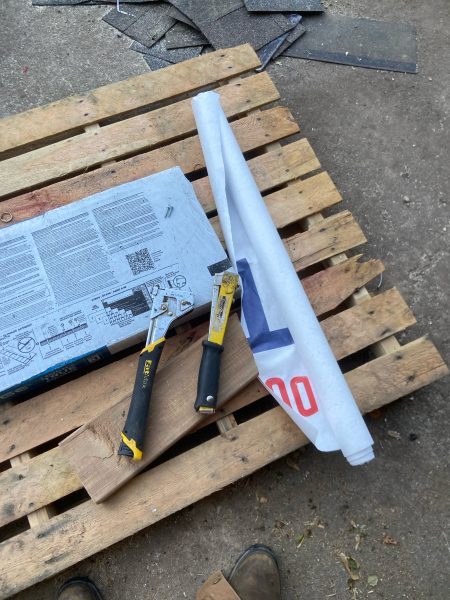
Walk onto any job site and you’ll see green apprentices swinging heavy-headed staplers until their forearms turn to rubber and their aim goes out the window. Or worse, you’ll see someone wrestling with a jammed, bargain-bin hardware store stapler at the top of an extension ladder, making every dangerous mistake in the book just trying to get a single sleeve of fasteners to fire.
I’ve put hundreds of thousands of staples into house wrap, insulation baffles, poly, and roofing underlayment over the last 15+ years. I’ve dropped them off two-story staging rigs, cleared thousands of jam-ups, and even thrown a couple of terrible ones right off a roof out of pure frustration.
If you want tools that won’t destroy your wrist or leave you stranded on a 12/12 pitch pitch, here is the absolute truth about the best heavy-duty staplers and hammer tackers on the market today.
The Snippet Killer: What Is the Best Construction Stapler?
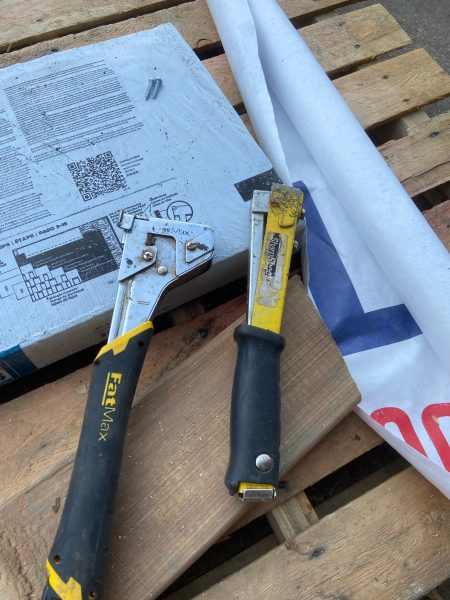
The best overall hammer tacker for speed and reduced wrist fatigue is the Stanley SharpShooter (PHT150). Its balanced, lighter head requires a lighter swing to drive staples flush, reducing fore-arm strain during massive house-wrap or synthetic roof underlayment jobs. For high-elevation ladder work or dirty framing sites, the Stanley FatMax is the most durable choice: its side-loading mechanism allows 99% of jams to be cleared with a single 3-inch framing nail, and its body locks securely into standard leather tool pouches.
The Journeyman’s Kit: Staplers That Earn Their Keep
When you’re choosing a manual stapler or hammer tacker, you aren’t paying for fancy features—you’re paying for driving force, jam clearance, and tool pouch ergonomics.
| Model | Best Use | Advantage |
| Stanley Sharpshooter | Speed, Tyvek, Roof paper | Lighter head, minimal wrist fatigue, easy flush drives |
| Stanley Fatmax | Ladder Work, High Abuse, Framing Sites | Fits tool belts, side-loads, 99% nail-clear jam system |
| Dewalt heavy duty | General Construction Backup | Solid strike plate, reliable, comparable to Fatmax |
| BOSTITCH BHT150C | Light Trim & Poly Work | Smooth action, but slide Smooth action, but slide abuse |
1. Stanley SharpShooter (PHT150): The Speed Champion
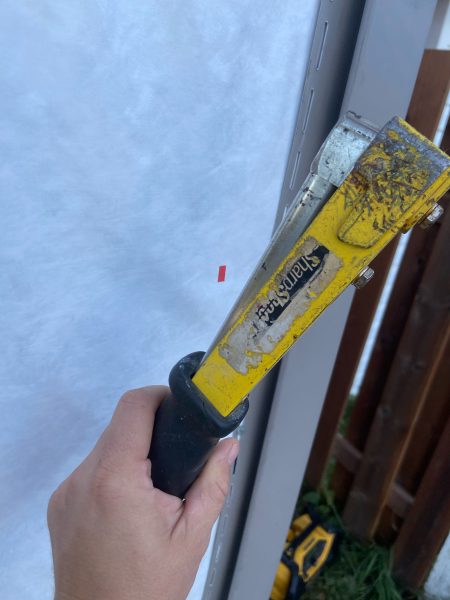
If I’m on a massive job wrapping an entire house in Tyvek or rolling out synthetic roof felt on a flat deck, the Stanley Sharpshooter is my absolute first pick.
Why It Wins on Speed & Fatigue
The biggest secret to the SharpShooter is its head weight distribution. Unlike heavier hammer tackers, you don’t need to swing the SharpShooter like a sledgehammer to get a full-depth strike. A light, flick-of-the-wrist swing drives the staple dead-flush into spruce or fir framing.
If you try to use that same light, effortless swing with a heavier stapler like a FatMax, you’ll be lucky if the staple even leaves the magazine.
The Green Apprentice Trap
When green apprentices use heavier staplers all day, wrist fatigue sets in by 2:00 PM. They get lazy, their aim strays, and they start misfiring. I had an apprentice working in a tight corner recently who lost his precision because he was fighting a heavy hammer tacker—he ended up swinging full force and catching his own finger with the strike head. (No sympathy on my job site—I handed him a Band-Aid and made fun of him for the rest of the day!)
The Integrated “Hammer Feature”
Another huge perk of the Stanley Sharpshooter: if you turn it sideways, the heavy steel head acts as a lightweight striking face. If you notice a framing nail or roofing clout sticking out of the sheathing while you’re slapping down paper, you can just smack it flat with the side of the SharpShooter’s head without reaching for your framing hammer.
2. Stanley Bostitch FatMax: The Ladder & Rough-Site Workhorse
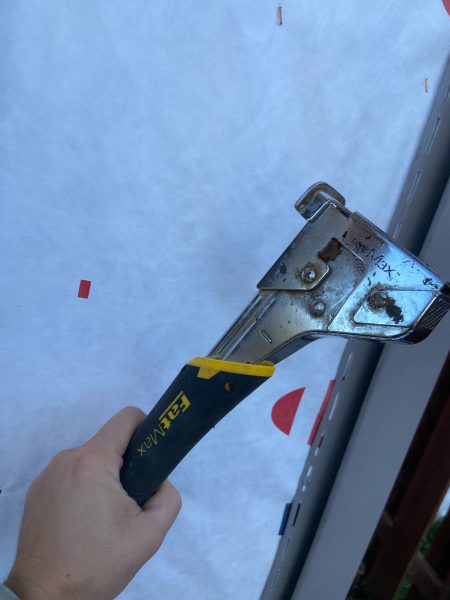
While the Stanley Sharpshooter wins on flat-ground speed, the Stanley Fatmax is the stapler I reach for the moment I climb an extension ladder or jump onto a staging rig.
Why It Belongs on a Ladder
The SharpShooter’s sleek design has one distinct drawback: it hates tool belts. If you drop a SharpShooter loosely into a leather pouch pocket, it tilts, bounces, and frequently plummets two stories to the ground when you reach or bend over.
The FatMax, on the other hand, is built chunky with distinct contours. It slides into a standard leather tool pouch or hangs securely on a belt loop, staying locked in place even when you’re maneuvering under soffits or climbing rungs.
The 99% “Single Nail” Jam Clearance
Every stapler on earth jams eventually. But the FatMax handles jams better than almost any manual tool ever built.
Because of its rear/side-loading slide assembly, 90% of FatMax jams clear by simply opening the latch, shaking the loose strip out, and re-latching. For the remaining 9% of stubborn jams, you can clear the chamber using a single 3-inch framing nail. You don’t need pliers or a flathead screwdriver—just slide a common nail under the jammed leg, pop it free, and you’re back in business in 5 seconds.
3. Clearing Severe Jams: The “3-Smack” Hammer Trick
Whether you’re running a Stanley SharpShooter, a Bostitch, or a DeWalt, getting a severe jam on a roof slope or top ladder rung can bring your momentum to a dead stop.
The #1 Job Site Mistake
⛔ CRITICAL WARNING: The absolute worst mistake you can make on a ladder when a stapler jams is trying to force-fire the tool without removing the staple sleeve first.
If you swing a jammed tacker against a wall hoping to force it through, you will drive a second staple directly behind the stuck fastener. This crushes multiple wire legs together inside the drive channel, welding the mechanism shut and making it nearly impossible to fix without shop tools.
How to Execute the “3-Smack” Un-Jam Method
If your SharpShooter or top-loading stapler gets a stubborn jam that won’t shake free:
- Pull the Tension Rod: Immediately release and pull out the spring-loaded staple feeder rod.
- Dump the Sleeve: Slide all remaining loose staples out of the magazine channel so the throat is completely clear.
- Execute the 3-Smack Rule: Hold the stapler firmly and smack the exposed bottom metal strike plate against a solid block of wood or framing member three times.
                       THE "3-SMACK" UN-JAM METHOD

   1. REMOVE STAPLES         2. SMACK BOTTOM PLATE      3. RE-ENGAGE SPRING
   ┌─────────────┐           ┌─────────────┐            ┌─────────────┐
   │ [Pull Rod]  │  ──────►  │  BANG! x3   │   ──────►  │ [Reload &   │
   │ [Dump Wire] │           │ (Against    │            │  Fire]      │
   └─────────────┘           │  Framing)   │            └─────────────┘
                             └─────────────┘
The impact forces the internal driver blade back up into its top resting position, releasing the trapped wire leg. Once the spring pops back out, reload your staple sleeve and start firing again. This trick clears 95% of field jams without needing a single hand tool.
4. The Material Truth: The Arrow T50 Rant
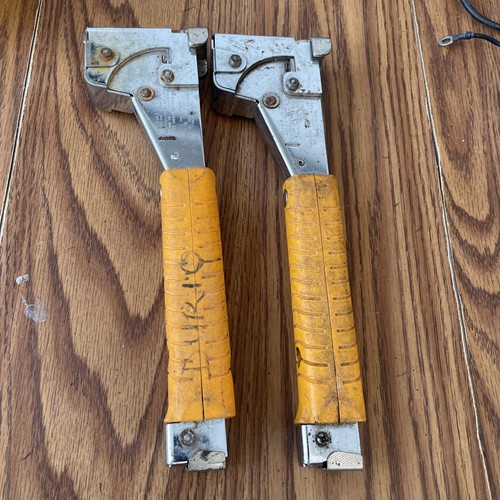
If you ask a homeowner or a DIYer what stapler they own, 90% of them will point to a classic chrome Arrow T50. They are sold in practically every hardware store in North America.
From a journeyman’s perspective: Arrow T50s are complete junk for trade construction work.
I’ve had to run Arrow T50s a handful of times in my career—usually when borrowing an owner’s or a laborer’s gear—and every single experience was a total headache.
- Bottom Slide Pops: When you swing an Arrow with force on a job site, the bottom magazine latch pops open, dumping full sleeves of brand-new staples all over the floor or roof deck.
- Misfires & Incomplete Drives: They leave staples sticking halfway out of spruce framing, forcing you to go back with a framing hammer to pound every fifth staple flat.
- Constant Jamming: The moment you try to run full-length heavy-duty wire sleeves through them at high speed, they collapse and jam.
Save the Arrow T50 for reupholstering a dining chair at home. Keep it off an actual framing site.
5. Staple Compatibility: Does Brand Name Matter?
A common question green apprentices ask is whether buying generic, off-brand bulk staples will ruin a good stapler.
The reality? A quality heavy-duty wire staple is a staple. If you blind-tested a premium Stanley staple against an Arrow or generic brand of the exact same wire gauge and leg length, performance is practically identical.
The main issue isn’t the wire brand—it’s match-up sizing and mechanical wear:
- Bosch & DeWalt Spring Fatigue: Higher-end staplers from Bostitch and DeWalt drive staples great when brand new, but their slide springs can loosen over time under heavy hammer abuse. When that spring tension relaxes, the slide backs off and allows loose staple sleeves to jump inside the channel, causing dry-fires.
- Stick Glue Quality: Cheap bulk staples sometimes use low-grade glue to hold the wire sticks together. In cold winter conditions, that cheap glue shatters inside your tool pouch, leaving you with hundreds of tiny, broken 3-staple fragments that feed unevenly into the gun.
Summary Checklist: Choosing the Right Stapler for the Job
- For House Wrap & Deck Underlayment: Pick the Stanley Sharpshooter. The lighter head saves your wrist and drives staples flush with minimal effort.
- For Ladder & Scaffolding Work: Pick the Stanley Fatmax. It stays locked in your tool pouch and clears jams instantly with a common nail.
- Always Clear the Channel First: Never strike a jammed stapler without pulling the staple sleeve out first—or you’ll crush multiple fasteners together inside the nose.
- Master the 3-Smack Method: Pull the feeder rod, clear the wire, and smack the bottom strike plate three times against wood to reset a stuck driver blade.
- Ditch the DIY Staples: Skip light-duty retail tackers like the Arrow T50 for framing or envelope work—they’ll pop open and ruin your momentum every time.
Check Out More Journeyman Field Guides
- How to Install a Kitchen Island Back Panel Without ScrewsLearn how to set thin 1/8″ cabinet backer panels dead-flat using dual-adhesive chemistry, zero face screws, and seamless touch-up tricks.
- The Best Corded Circular Saw A Journeymans Review 2026 Find out which circular saw is the best and preferred by the trade experts.
- How to Fix a Broken Shower Tile in 1 Hour (The “Instant Bond” Hack) At the last stage of tiling and one pops off, heres how to fix it and finish it that day.