
Difficulty: Level 3 (Plumbing Basics)
Time: 2–4 Hours
I once watched an apprentice set a shower valve flush with the back wall of the stud bay. By the time we realized it, the tub surround was already glued on. The valve was buried so deep the handle wouldn’t even snap on.
Most people would have ripped the wall down. I didn’t have time for that. I grabbed a flex-shaft drill extension , some 2-inch strips of wood, and instant bond glue. Working through a tiny hole like a surgeon, I managed to glue spacers behind the valve to push it forward. It took almost an hour and a lot of patience, but we saved the wall.
That nightmare taught me one thing: The most important part of installing a shower valve isn’t the pipe—it’s the set-up.
If you are a beginner, put down the torch. We are using PEX. It’s forgiving, it’s fast, and you won’t burn your house down. Here is how I install a shower valve the “Journeyman Way.”
Direct Answer: How to Install a Shower Valve
To install a shower valve using PEX, first mount the valve body to a wooden stringer at a height of 40-48 inches. Apply Teflon tape to all male threads, screw on PEX female adapters, and secure the valve at the correct depth relative to your finished wall thickness. Connect your hot and cold water supply lines using PEX crimp rings and a crimping tool, ensuring all pipes are braced to prevent water hammer.
The Hunter’s Toolkit: What You Need
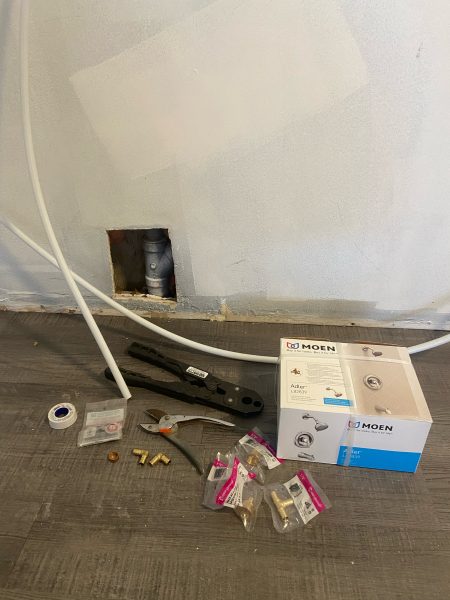
Before you open the wall, get these specific tools. Don’t try to use pliers to crimp PEX; it won’t work.
### 🛠️ The PEX Essentials
- PEX Crimp Tool Kit (Get the one that includes the cutter and the “Go/No-Go” gauge).
- 1/2″ PEX Pipe (Red and Blue helps, but White works for everything).
- 1/2″ Copper Crimp Rings
- SharkBite Couplings (If tying into old copper pipes).
### 🚿 The Valve Hardware
- Pressure Balanced Shower Valve Kit
- 1/2″ Female NPT Adapters (You need 3 or 4 depending on if you have a tub spout).
- Teflon Tape (Do not skip this).
- Instant Bond Glue (For the “Opps” moments).
Step 1: The “Duck Test” (Setting the Height)
Most textbooks tell you to set the shower head at 80 inches and the valve at 30 inches. I ignore them.
I hate ducking in a shower. I’m a tall guy, and standard rough-in heights are stuck in the 1950s.
- Valve Height: I typically set my valve 36 inches off the floor. This is comfortable for standing and high enough that you aren’t bending over if you’re using it as a tub filler.
- Shower Head Height: Go higher than the instructions say. If you have the ceiling height, put that head up where you can actually stand under it.
Journeyman Tip: If you are installing a tub spout, make sure you leave enough distance between the valve and the spout (usually 8-12 inches) so you can still fit a bucket under the tap.
Step 2: The “Drywall Spacer” Trick (Crucial Step)
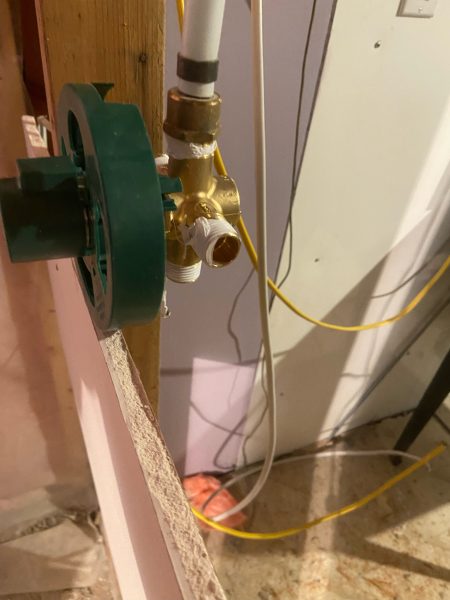
This is where my apprentice messed up. You have to account for the thickness of the finished wall before you screw the valve to the stringer (the wood block between studs).
- The Rule of Thumb: It is always better to set the valve a little further back than too far forward. The screws in the trim kit are long—they can reach back. But if the valve sticks out past the tile, you are in big trouble.
- The Spacer Hack:
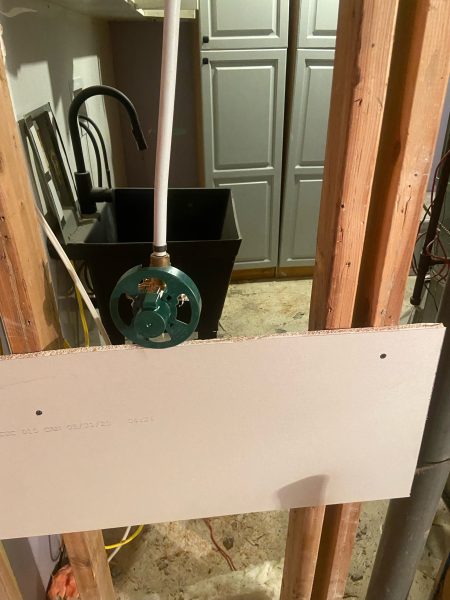
- If you are installing a Tub Surround: Grab a scrap piece of drywall (usually 1/2″) and hold it against your stud. Set the plastic mud guard of the valve flush with that drywall.
- If you are installing Tile: Account for the drywall plus about 1/4″ for the tile and thinset.
- The Fix: If you are unsure, err on the side of “deeper in the wall.”
Step 3: Prep the Valve (Do This BEFORE Mounting)
Do not try to tape threads inside a dark wall cavity. Put the valve on your tailgate or workbench.
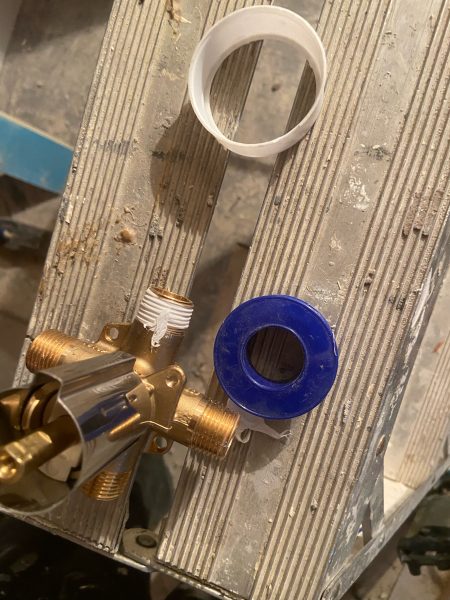
- Tape It Up: Wrap Teflon Tape clockwise around every male thread on the valve body.
- Adapters On: Screw your 1/2″ Female PEX Adapters onto the valve ports. Tighten them down with a wrench now so you aren’t torquing on the valve once it’s in the wall.
- Mounting: Now, screw the valve body to your stringer board. Make sure it’s level. If it’s crooked, your handle will be crooked, and you will hate it every time you shower.
Step 4: The PEX Connection
This is why I love PEX for beginners. No soldering, no fire watch, no burnt studs.
- Cut Square: Use your PEX Cutters to get a clean, square cut on the tubing.
- Ring & Slide: Slide a copper crimp ring onto the PEX pipe, then slide the pipe onto the barbed fitting of your adapter.
- The Gap: Leave a tiny gap (about 1/8″) between the crimp ring and the valve body.
- The Crimp: Open your Crimp Tool, place it over the ring, and squeeze until it clicks or stops. Use the “Go/No-Go” gauge included in the kit to make sure it’s tight enough.
### ⚠️ The “Hunter’s Instinct”: Check the Bracing The #1 thing people miss is bracing the pipes. PEX is flexible, which means it likes to move.
- The Rattle: If you don’t strap the pipes down, every time you turn the water on, the pipes will “jump” inside the wall (Water Hammer).
- The Fix: Use plastic PEX talons or clamps to secure the pipe to the stud every 32 inches. Make sure it’s solid.
Step 5: The “SharkBite” Transition
Chances are, your old house has copper pipes coming up from the floor. You don’t need to learn to solder just to connect them to your new PEX valve.
- The Saver: Use a SharkBite Coupling (1/2″ Copper to 1/2″ PEX).
- Clean the Copper: This is vital. Sand the old copper pipe until it shines and make sure there are no burrs. If the copper is dirty or oval-shaped, the SharkBite o-ring won’t seal.
- Push to Click: Push the fitting onto the copper, then push your new PEX into the other side. Done.
FAQ: Questions You’ll Have in 2026
1. How deep should a shower valve be set in the wall?
Refer to the “Mud Guard” (the plastic cover) that comes with the valve. Generally, the finished wall (tile/surround) should sit flush with the front of that guard. If in doubt, set it slightly deeper—trim kits have long screws to compensate for depth, but they can’t hide a valve that sticks out too far.
2. Do I need to remove the cartridge before soldering?
Yes! If you ignore my advice and decide to solder copper pipes directly to the valve, you must remove the plastic cartridge inside first. The heat from the torch will melt the rubber seals and the plastic body, ruining the valve instantly. With PEX and threaded adapters, you don’t need to remove the cartridge.
3. Why is my shower valve leaking from the handle?
This usually means the cartridge wasn’t seated properly or debris got into the line during installation. Always flush the lines (turn the water on for a second without the cartridge in) before final assembly to blow out any sawdust or plastic shavings.
What’s Next?
Now that your valve is roughed in and rock solid, you need to close up that wall. If you are dealing with a basement renovation, check out my guide on How to Move a Bathtub Drain in a Concrete Slab to get the rest of your plumbing sorted.
And if you messed up the framing, don’t panic—read my trick on How to Extend a Wall Perfectly Flush so your tile work looks professional.