
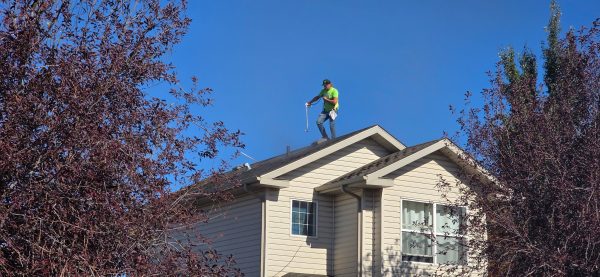
In the home renovation world, we’re used to seeing “miracle products” come and go. As a Journeyman Red Seal Carpenter, my job has always been to look past the marketing and focus on the structural reality. If you’ve been hearing about “roof rejuvenation” or “shingle preservation” and wondering if it’s a scam or a legitimate maintenance tool, you aren’t alone.
In 2026, the technology has matured. If you use a reputable company in good standing—brands like Bright Green Roof or the GoNano systems—you are looking at a product that doesn’t just sit on top of the shingle; it works its way into it.
The Science: Why Your Roof is Dying
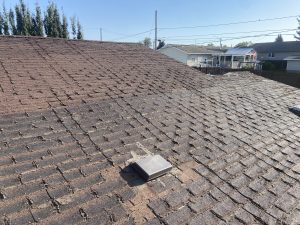
Your asphalt shingles are essentially a sandwich: a fiberglass mat, asphalt (oil), and granules. The sun is the primary enemy. It “zaps” the oils out through UV degradation, leaving the shingles brittle and dry.
When the oils disappear, the shingle loses its grip on the granules. Once those granules end up in your gutters, the fiberglass mat is exposed to the elements, and that’s when the clock starts ticking toward a $15,000 replacement. Preservation works by putting the oils back in, restoring pliability and locking those granules down.
1. The “Sweet Spot”: When to Spray and When to Walk Away
Timing is everything in carpentry. You don’t wait for a floor to rot before you fix a leak; you catch it early.
- The Perfect Window: Typically around the 10-year mark. By year 10, the original oils have off-gassed enough that the shingle is thirsty, but still structurally sound.
- The Early Limit: I wouldn’t recommend spraying before 7 years. The factory oils are usually still doing their job until then.
- The “Too Late” Red Flags: If your shingles are curling like a stale cracker or have massive bald spots (missing granules), preservation won’t save you. You can’t “rejuvenate” a shingle that has already lost its structural integrity.
- The Gutter Test: If you’re starting to see a significant amount of “sand” (granules) in your downspouts, that is your roof’s way of screaming for oil.
2. The Bleach Blunder and the “Magic” of Restoration
I’ve seen homeowners do some desperate things to save a roof. The “dumbest” fix? Bleaching the roof.
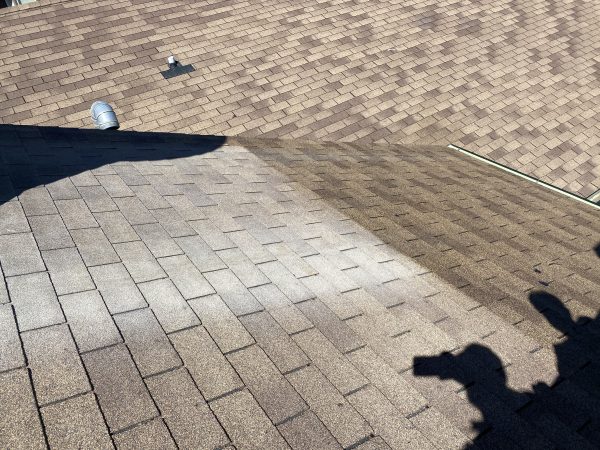
People do this to kill moss or algae, but it’s like using a blowtorch to kill a weed. It dries out the shingle even faster and often leads to “low-fading”—where your vents and flashings look like they’ve been sitting in the desert for 40 years.
One of the most impressive things about modern preservation (especially the Bright Green Roof system) is the color restoration. It takes those faded, grey, “tired” shingles and brings back that deep, original look. While Nano-tech focuses heavily on extreme flexibility, the BGR system hits that perfect balance of making the shingles flexible again while making the house look ten years younger.
3. The Northern Climate Factor: Freeze, Thaw, and Wind
In the Northern States and across Canada, our roofs face a unique torture test. We swing from +35°C in the summer to -40°C in the winter.
- The Winter Crack: In a prairie winter, dry shingles become brittle. When the wind picks up, a “dry” shingle has no “give.” It snaps or cracks, making it easy to blow right off the roof.
- The Summer Zap: The intense UV rays act like a vacuum, pulling the oils out.
- The Hidden Benefit: Preservation doesn’t just stop leaks; it increases wind and hail resistance. By making the shingle pliable again, it can “bounce back” from a hailstone or flex in a windstorm rather than shattering.
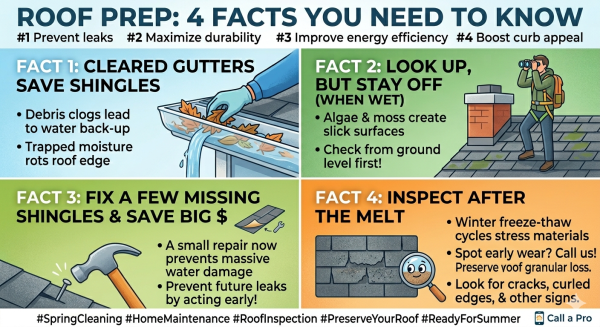
“DIY Safety” Section
A huge part of roof work is safety. Even if they hire a pro to spray, they might want to get up there and check things out themselves.
- Safety Harnesses / Roof Anchors: Essential for anyone stepping onto a 6/12 pitch or higher.
- Roofing Shoes (Cougar Paws): Mention how important grip is when you’re checking for granule loss.
What Does Roof Preservation Cost in 2026?
When I’m talking to homeowners, the first question is always: “What’s the damage?”
The truth is, the cost to preserve a roof depends on a few factors—the size, the pitch (steepness), and how many valleys or dormers you have. However, as a general rule of thumb, you can expect to pay around $1.00 per square foot for a professional-grade preservation treatment.
The “Red Seal” Math: How to Estimate Your Quote
It’s important to remember that the square footage of your house is not the square footage of your roof. If you have a 1,200 sq. ft. bungalow, your roof is actually much larger because of the overhangs and the slope.
To get a realistic “back of the napkin” estimate, here is how a pro looks at it:
- Start with the Footprint: Take the square footage of your house and include your attached garage.
- Add the Overhangs: Most roofs hang about 1–2 feet past the walls.
- The Pitch Multiplier: If you have a standard 4/12 pitch (a common roof slope), you need to multiply your flat footprint by 1.054 to account for the angle of the shingles.
The Typical Example: For an average 1,200 sq. ft. house with an attached garage, you’re usually looking at roughly 2,000 sq. ft. of actual roofing surface. At the “dollar a foot” rule, that puts your total at roughly $2,000.
Pro Tip: If you have a massive, steep roof with lots of peaks and valleys, a contractor might charge a bit less per square foot because of the volume. Conversely, if you have a tiny, very complex roof, they might charge a bit more per foot because the setup and safety prep take just as long as a big house.
Why Spend $2,000 Now?
Compare that $2,000 to the cost of a full tear-off and replacement in 2026, which can easily run you $12,000 to $18,000 for a standard home. Preservation isn’t an expense; it’s an investment that keeps $15k in your bank account for another decade.
4. The “Red Seal” Standard: Don’t Hire any “Spray Guy”
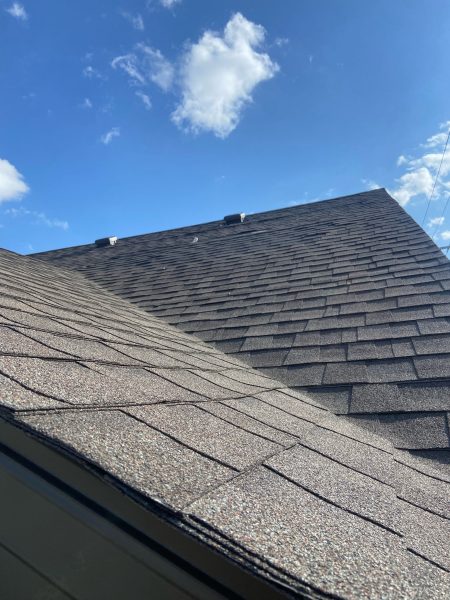
If you’re looking to get your roof sprayed, you need to ask: Does this person actually know how a roof works?
A “Spray-and-Go” contractor will just coat whatever is there—debris, moss, and all. A Roof Expert or a Journeyman-led crew provides a “Roof Tune-up” first. Before a drop of product touches the shingles, you need:
- Nail Pop Check: Fixing those backed-out nails that cause leaks.
- Valley Cleaning: Ensuring the “gutters of the roof” are clear of debris so water can flow.
- Flashing Inspection: Checking the metal around chimneys and vents.
You want a company that understands the entire system, not just the spray gun.
The Verdict
Is roof preservation worth it in 2026? Yes. If your roof is in that 7-to-20-year window and the shingles are still flat, you can effectively “reset the clock” for another 5 to 10 years at a fraction of the cost of a new roof. From a pure math sense its worth it and saves you money.
Just remember: Preservation is a tool, not a miracle. Don’t wait until the shingles are curling. Catch it while it’s thirsty, get a professional tune-up, and let the science of the oil do the rest.