
I’ve spent years running Compass Carpentry, and if there’s one thing that can make a high-end renovation look like a cheap DIY job, it’s bad caulking. I’ve walked onto sites where homeowners—and even some “pros”—have used 100% silicone against a drywall wall. It’s a disaster. The paint beads up, it looks like a sticky spiderweb, and if you ever have to repair that drywall later—especially on a popcorn ceiling—you’re in for a nightmare of scraping and mudding that shouldn’t have happened in the first place.
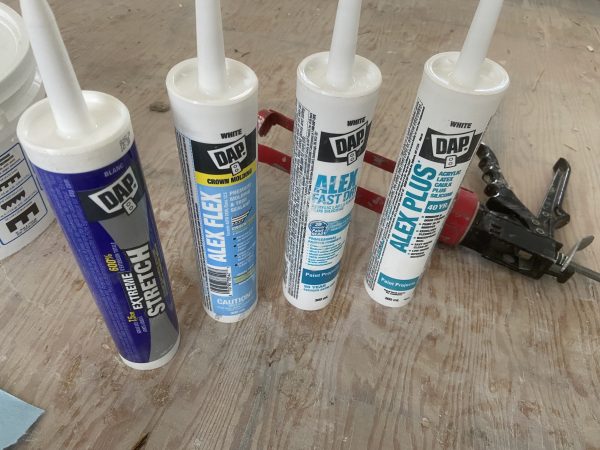
There is a reason we use Acrylic Latex with Silicone. It pulls, it’s workable, and most importantly, it’s paintable.
To settle the debate on which tube is actually worth buying, I put four DAP heavy-hitters to the test all in white: Alex Plus, Alex Plus Fast Dry, Alex Flex Molding & Trim, and Extreme Stretch. I tested them on baseboards and ceilings to see which one actually holds the line.
The Snippet Killer: What is the best caulk for baseboards and ceilings?
For baseboards, the best all-around performer is DAP Alex Plus (Acrylic Latex + Silicone) due to its superior workability and 40-year durability. For ceilings, use DAP Fast Dry for small gaps to speed up the painting phase, or DAP Extreme Stretch for large gaps (over 1/4 inch) to prevent cracking caused by house settling and structural movement. But hey DAP Alex Plus has an unfair advantage as it is the one ever Carpenter learns on.
1. The Field Test: Which DAP Wins?
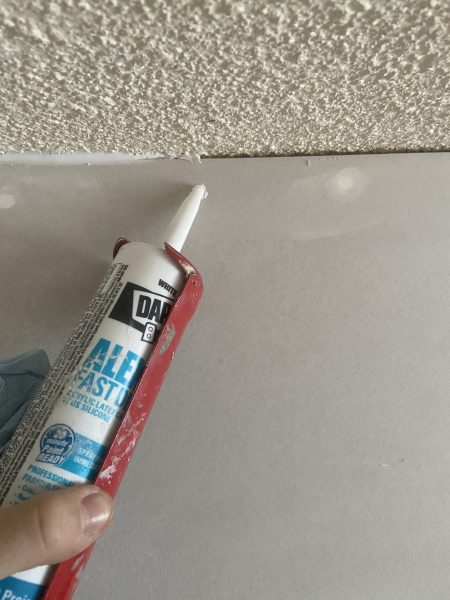
I ran these four products through the ringer on both baseboards and ceilings. Here is the honest breakdown to find out which is the top dap product to use:
- DAP Alex Plus (The “Ride or Die”): This is my default. It’s the most workable caulk I’ve found for the top of baseboards. It behaves exactly how you want it to under your finger. It works decently on ceilings too, provided the gap isn’t a canyon.
- DAP Fast Dry: I prefer this specifically for ceilings when the gaps are small. When you’re working overhead, you want to get that paint on and get out. This saves you the wait time without sacrificing the bond.
- DAP Extreme Stretch: This is the MVP for the big stuff. If you have gaps over 1/2 inch or more where the wall is waving or the ceiling is sagging, this is the only one I trust.
- Alex Flex (Crown Molding): Honestly? It was fine, but I liked it the least. It didn’t have the same “feel” as the Alex Plus or the specialized utility of the Extreme Stretch.
The “Showdown” Comparison Table
| Product | Best Application | Max Gap Size | Pro Verdict |
| Alex Plus | Baseboards / Trim | 1/4″ | The industry standard for a reason. |
| Fast Dry | Small Ceiling Gaps | 1/8″ | Great for fast turnarounds on tight joints. |
| Extreme Stretch | Large Gaps / Vaults | 1/2″+ | Use this for settling houses and big voids. |
| Alex Flex | Crown Molding | 1/4″ | Decent, but Alex Plus is more versatile. |
2. The “Half-Inch Canyon” Strategy
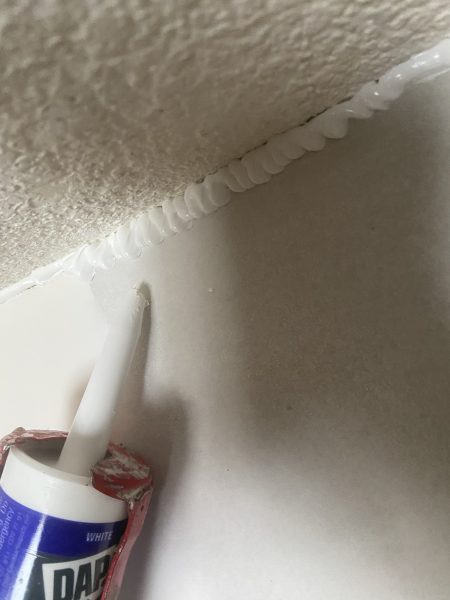
When you hit a gap that is over 1/2 inch wide, you can’t just pull a single bead and call it a day. If you try to do that with Fast Dry or standard Alex Plus, it’s going to shrink, crack, and look like garbage. You will be back the next day after its dry to put another layer on.
The Staged Fill Technique:
If you’re using Extreme Stretch on a massive gap, you have to “blob” it in first. Fill the bulk of the void, like the photo then smooth it out let it dry and “skin over,” then come back and pull your final sealing bead. It takes two passes, but it’s the only way to ensure that gap stays closed for the next decade.
The Journeyman’s Kit: Caulking Essentials
- The Gun: A high-ratio dripless caulk gun. Don’t buy the $5 orange ones; your forearms and the finished bead will thank you. It is worth paying a little more for.
- The “Secret” Smoothing Liquid: WD-40 or compressor oil. (See the pro tip below).
- The Clean-Up: A dedicated bucket of clean water and a stack of lint-free rags.
3. The Journeyman’s Eye: Spotting an Amateur
You can tell a pro did the caulking by what you don’t see. An amateur leaves “bumps” in the bead or lets the caulk bleed three inches up the wall.
The Finger Trick:
Every apprentice I train gets the same talk. If you want a smooth bead, you need a wet finger. I personally just lick my finger (yeah, it tastes terrible, use water if you’re green), pull the section, and then clean your hand immediately. > Pro Tip: My old journeyman used to keep a small tin of WD-40 or compressor oil. He’d dip his finger in that before pulling a bead of 100% silicone. It keeps the caulk from sticking to your skin and lets you pull a perfectly radiused bead every time. For DAP acrylic, it’s not strictly necessary, but for an amateur struggling with sticky fingers, it’s a total game-changer.
4. Why Caulking Isn’t Just “Hiding Mistakes”
Yes, caulking hides a bad cut or a wavy wall. We’ve all been there. But as a Red Seal pro, I tell my clients that caulking is functional.
- Dust and Hair: Even a “perfect” wood-to-wall join has a microscopic gap. Over time, that gap fills with dust, pet hair, and skin cells. Caulking seals that off.
- The Mold Factor: In bathrooms or kitchens, that gap is a highway for moisture. Water gets behind the baseboard, stays trapped against the plate, and creates a mold factory that you won’t see until you rip the walls open five years later.
5. The Final Finish: Don’t Ruin the Paint
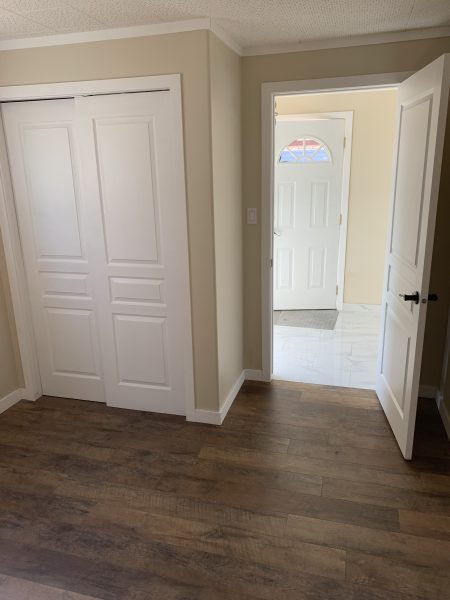
After you’ve spent the time mudding, taping, and caulking, don’t kill the project at the finish line.
- Vacuum the Wall: Sanding dust is the enemy of caulk. If you don’t vacuum the top of that baseboard before you hit it with DAP, you’re just caulking over dust. It will peel.
- Sanding Between Layers: Use a sand stick between every layer of mud and even a quick wipe before caulking. It prevents those “atrocious” amateur bumps.
- Choose the Right Sheen: If your walls aren’t perfect, stay away from high gloss. It’s unforgiving. A nice Eggshell finish is the standard for a reason—it hides the minor waves in the wall while staying durable.
What’s Next?
Getting the right seal is only half the battle. If you’re looking to level up the rest of your renovation game, check out these guides: